

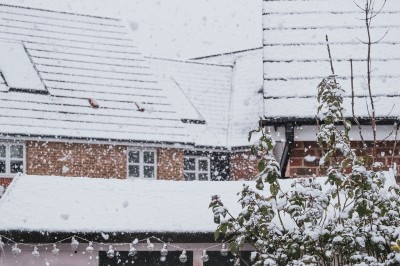
As temperatures drop across the UK and with the threat of snow forecast, many people are looking for cost effective ways to keep their homes warm as they continue to battle against the cost-of-living crisis.
For Energy Saving Week 2023, we look at some of the ways you can keep your home warm without breaking the bank this winter.
Insulation is a relatively simple, yet highly effective way of reducing the heat lost from your home.
There are a number of different types of insulation that can be added to your home, including loft and roof insulation, cavity wall insulation and floor insulation.
Many older homes in the UK lack an adequate amount of insulation and a recent study by EDF* in partnership with Sprift found that of the 21 million homes that they analysed, only 58% had an insulation age of 1976 or earlier.
Adding insulation to your home is relatively easy, particularly in cavity walls and open loft areas. Solid walls and floors will require more work and there will be a bigger cost attached to this.
As the cost-of-living crisis emerged last year, the Government pledged an additional £1bn to the existing £6.6 billion ‘Help to Heat’ energy scheme, offering up to £1,500 under the Energy Company Obligation + (ECO+)ϯ scheme.
This scheme, which will launch in Spring 2023 is intended to help a wider customer base who are not currently supported under existing government–backed energy efficiency schemes.
Investing in double (or triple!) glazing will help to insulate your home, reduce noise and increase your security.
Single glazed windows lose heat twice as fast as double-glazed windows, so as prices continue to rise and with the life span of double glazing being approximately 20 years or more, they are a cost-effective way to help keep your home warm.
Secondary glazing, which includes fitting a secondary pane of glass to the inside of an existing window is a low-cost option to double glazing and although it wont be as well sealed, will help save energy.
For homeowners in conservation areas or for people living in a listed building, permission is required to install double glazing. Always check with your planning office before proceeding!
The type of external door on a house can make a huge difference in how much heat is lost from the home.
There are many options available when it comes to choosing an external door, and the type of door you choose will often depend on personal taste, style of house and ultimately, budget.
Wooden, composite and uPVC doors are all energy efficient and can ensure your home looks good and is safe too.
There are many ways that you can prevent draughts in your home to help reduce the amount of energy used to keep it warm.
Identify where draughts are coming from and plug any holes that you find. Other options include draught excluders at the bottom of doors which have long been used to keep homes warm and are a cheap and effective solution.
Fit heavy curtains where possible and keep curtains and blinds closed to prevent heat from escaping and maintain a warmer temperature.
As part of the UK’s bid to reach our ‘Net Zero’ target by 2025, the Government wants to increase the number of households installing heat pumps as part of efforts to replace gas boilers and cut carbon emissions.
Heat Pumps capture heat from the air, ground or water and move it into the home to maintain an ambient temperature using an electric compressor which uses significantly less energy than fossil fuel.
Government incentives are available for homeowners to encourage them to install this technology, with people in England in Wales able to claim a £5,000 grant towards the costs and homeowners in Scotland able to claim up to £7,500.
On the 17th January 2023, British Gas¥ announced even more incentives by reducing the starting costs to £2,999, as opposed to £8,000. This new pricing structure means the ‘greener’ heat pump option could now cost around the same price as installing a new gas boiler.
* EDF and Sprift Study
ϯ ECO+ Scheme
¥ British Gas
Many of our clients are families or individuals living with disabilities who need a consistently warm temperature in their home.
With the cost of living rising and temperatures dropping, many people are struggling to meet energy bills.
For anyone who is worrying, support is available. The charity, Scope and it’s Disability Energy Support Service, provides free energy and water advice to those living with disabilities.
For more information about France + Associates, please do not hesitate to contact our team: 01484 960560 | admin@franceandassociates.co.uk.
For more information, contact us on
01484 960560 or email us +


Related News +

If you would like to know more about our work, please contact us +


Copyright 2026 © France+Associates | All Rights Reserved. Made By Aim.


