

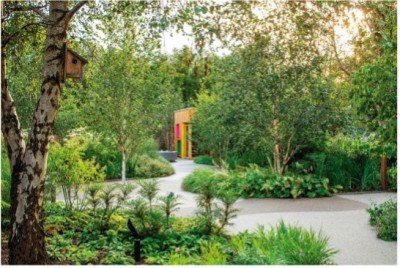
Architectural Technologist, Anya Fearn (HNC ACIAT), explores how thoughtful, inclusive design can help everyone experience the wellbeing benefits of nature at home.
There’s something about a beautiful view, sunlight trickling through a window, a walk through a meadow, and the scent of fresh woodland. In an age of technology and screens, both having their place, there still is something within us that calls for a connection with nature. Integrating the natural world within our homes and facilitating access to nature on our doorsteps has a profound effect on our health, both physically and mentally. Through thoughtful architectural design, the outside world can be made accessible to all.
Designing for Outdoor Accessibility
You likely enjoy spending time in your garden, whether gardening or just simply enjoying time in your outdoor space. If you are like me, our garden is a work in progress but the idea of a barbecue, al fresco dining or conversations in a relaxed outdoor setting with friends fill you with joy. For most, enjoying the outdoors is about spending time with friends and family - a social space that has meaning and brings happiness. So why shouldn’t everyone be able to enjoy that same setting, regardless of their abilities or independence?
Designing an accessible outdoor space requires incorporating features that ensure an individual can access and interact with their garden. Level thresholds, appropriate ramp gradients, suitable surfaces and upstands, handrails, and sufficiently wide paths — all tailored to the individual’s needs — allow access to the outdoors. Thought should be given to providing widened pathways, to enable accessibility and allow side-by-side travel, encouraging connection. For individuals eager to engage in planting, accessible raised beds that allow wheelchair access beneath them create opportunities for meaningful participation. Incorporating sheltered areas with seating encourages prolonged outdoor time and provides protection from the elements, to which many may be sensitive to. Incorporating additional features such as sensory equipment, resting places and tactile experiences provides opportunities to engage with the outdoors and spend quality time within it.
Various studies have shown the benefits of engaging with outdoor activities for individuals affected by neurodegenerative disorders, as well as spinal cord and brain injuries. Walking outdoors enhances the functional reorganisation of neural pathways involved in motor control, increasing engagement and motivation. Whilst regular outdoor activities also improve gait and balance by positively influencing the plasticity of neural circuits involved in motor control. Fresh air and sunlight may reduce oxidative stress and inflammation in the brain. Varied terrains and different surfaces challenge the motor system, encourage proprioceptive feedback, support the rewiring of motor neurons and aid recovery.
If an outdoor space within an individual’s own home can facilitate neurological rehabilitation whilst providing both physical and psychological benefits, why should it not be considered an essential component of design?
Natural Light
Incorporating ample natural light should be a key consideration in design by appropriately positioned glazing, furniture placement and a light colour palette within the home. Thoughtfully designed glazing fosters a connection with nature and the outside world from within. On days when an individual may be managing reduced energy levels or conditions that prevent access to their outdoors space, simply sitting or lying by an open window and observe nature from within can improve overall well-being.
Unfortunately, glazing doesn’t come without its challenges and designers must consider building orientation, insulative performance, structural limitations, and local climate conditions to ensure safety, energy efficiency, reduce noise and protection from the elements. When glazing is designed and positioned thoughtfully and at a height suitable for the individual, whether in a wheelchair or ambulant, it should allow everyone to enjoy views from their own home.
Where a home is in an area with limited views, considering varied planting, establishing shrubs and trees and improving the appearance of boundary treatments can facilitate an environment conducive to wellbeing and allow an individual to feel supported.
A Breath of Fresh Air
Incorporation and use of outdoor space is preferable; however, this may not always be possible depending on location and the individual’s specific needs. Therefore, improving indoor air quality is vital to ensuring a healthy indoor environment. We spend around 90% of our time indoors, so logically our indoor environments should be conducive to wellbeing and productivity. Fresh air plays a key role in this.
As architecture advances towards increasingly airtight structures, the flow of fresh air may be limited. Bringing in fresh air increases oxygen levels, which helps the function of white blood cells. These cells play a key role in defending the body against infection. Spaces with good ventilation discourage mould growth and bacterial spread. If an individual suffers from a respiratory condition, considering whether a mechanically ventilated fresh air system should be incorporated may be a key contributor to improving respiratory health.
Indoor Greenery
Many wouldn’t claim themselves to be green fingered, but introducing low maintenance plants within the home can have a positive impact on overall health and well-being. According to various studies, indoor plants have been shown to have ample benefits such as improving mood, reducing stress, increasing productivity, and increasing pain tolerance. They help to reduce outdoor-derived compounds such as nitrous oxides, carbon monoxide, carbon dioxide and particulates (dust-like particles) as well as indoor-derived contaminants such as volatile organic compounds (VOC). VOCs are group of substances which are emitted from furnishings, detergents, paints etc. and can have adverse health effects on humans.
Whilst allowing fresh air circulation can significantly reduce these substances, during winter months, open windows, and natural ventilation may be reduced. Indoor plants can be beneficial in reducing these compounds. They also allow an individual who may be unable to regularly access the outdoors, to enjoy the outside within their own home.
Making a Difference
It’s practical to consider that a budget may not always allow for extensive accessible garden design. However, designs can still prioritise a connection to nature. Harnessing natural light, effective ventilation and indoor greenery can enable an individual to bring the outside in and enjoy the beauty that nature offers. So when designing a building for life, it’s not just about the fabric, it’s about ensuring the outside world can be seen and experienced from within.
Links and references:
https://www.physiopedia.com/The_Environment_and_Neurological_Physiotherapy#cite_note-6
https://www.rhs.org.uk/plants/types/houseplants/for-human-health
https://www.gardensillustrated.com/garden-design/design-accessible-garden?utm_source=chatgpt.com
For more information, contact us on
01484 960560 or email us +


Related News +

If you would like to know more about our work, please contact us +


Copyright 2026 © France+Associates | All Rights Reserved. Made By Aim.


